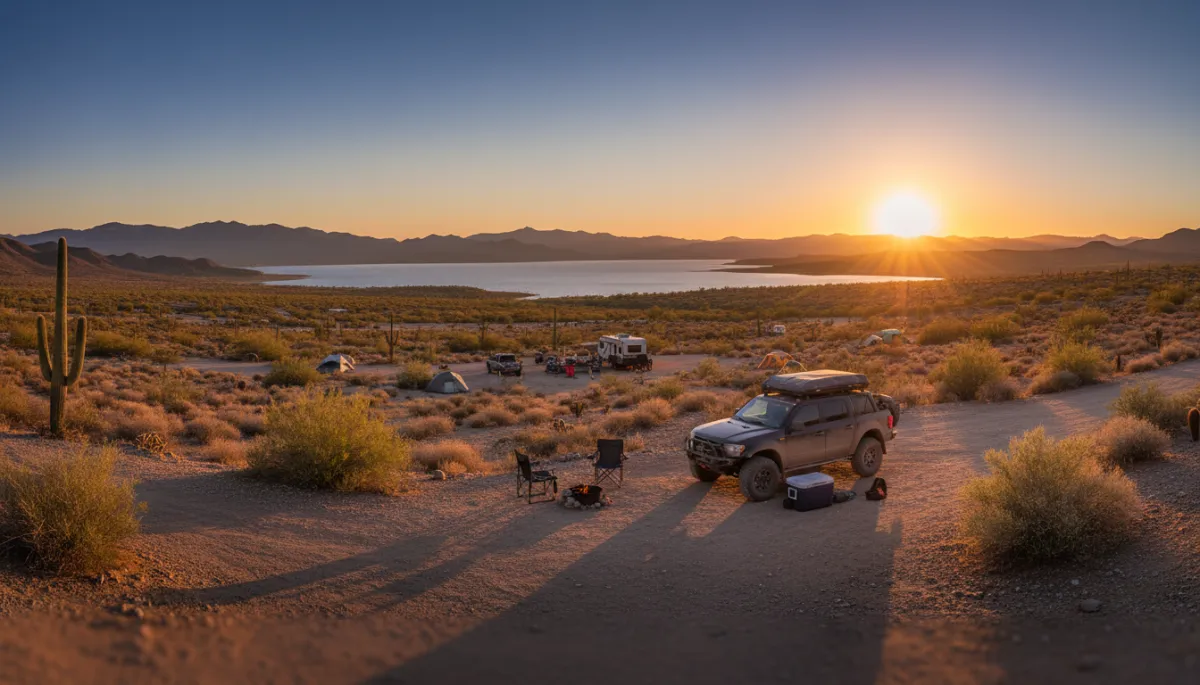
2026 Government Wash Camping Guide
Government Wash Camping, Lake Mead Camping, Off-grid Camping, Las Vegas Getaways
Government Wash Camping Update 2026: What Off‑Grid Campers Need to Know
Planning an off‑grid desert escape near Las Vegas? Government Wash at Lake Mead has changed dramatically over the last couple of years. This 2026 camping update walks you through what’s new, what’s gone, and what you absolutely need to know before you roll in for that classic Lake Mead camping experience.
From Wild Free‑For‑All to Managed Primitive Camping
For years, Government Wash camping was synonymous with wide‑open, anything‑goes boondocking. RVs, vans, and tent campers scattered along the shoreline with no assigned spots, minimal oversight, and plenty of long‑term encampments. That era ended in August 2024, when the National Park Service (NPS) shut down vehicle access and overnight camping due to heavy misuse, trash, unauthorized roads, and resource damage (BlueRibbon Coalition).
Over the next 18 months, NPS removed long‑term camps, hauled out more than 12,000 pounds of debris, repaired erosion, and restored the fragile desert landscape (NPS). On February 7, 2026, Government Wash officially reopened—not as a free‑for‑all, but as a structured primitive area with clearly defined sites and rules designed to keep it from sliding back into chaos.
Is Government Wash Still “Real” Open Desert Camping?
If you loved Government Wash for its open desert vibe, the good news is that the core experience is still there. You’re still camping on exposed desert overlooking Lake Mead, with big skies, distant city lights from Las Vegas, and no full‑hookup infrastructure. This is still off‑grid camping in every practical sense: no electric hookups, no water at your site, and no sewer connections. You need to arrive fully self‑contained and ready for true desert camping conditions.
What has changed is the layout. Instead of parking anywhere on a maze of user‑created tracks, you’ll now find about 47 defined campsites with improved access roads and signage (Yahoo News). Sites are still free and first‑come, first‑served, but you’re expected to stay within those designated pads and pullouts. Think of it as structured boondocking: real, open desert camping, just with clearer boundaries and expectations.
2026 Rules & Limits: Before You Go to Government Wash
Before you point your rig toward Lake Mead, it’s important to understand the current regulations. These are the key pieces of the 2026 camping update that matter most to off‑grid campers:
Free, first‑come, first‑served: Government Wash camping is free, and there are no reservations on Recreation.gov. You simply drive in and claim an open site if one is available (NPS).
Stay limit: Overnight camping is generally limited to 28 days at Government Wash before you must move at least a quarter‑mile away (The Dyrt). Lake Mead as a whole caps camping at 90 days in any 12‑month period (NPS Compendium).
Possible summer closures: NPS is actively monitoring use and has floated the idea of suspending overnight camping during the summer of 2026 due to heat and resource impacts (Yahoo News). Always check current alerts before you head out.
No hookups or developed facilities at sites: Expect zero site‑level services. Some basic restroom facilities are available in the area, but you won’t find water spigots, dump stations, or power at your campsite (Snoflo).
Standard Lake Mead rules apply: Quiet hours (typically 10 p.m. to 6 a.m.), leash laws for pets, fire regulations, and restrictions on glass and Styrofoam™ all apply here just as they do in other Lake Mead camping areas (Recreation.gov).
💡 Pro Tip: Treat Government Wash as true boondocking. If you wouldn’t be comfortable camping off‑grid on BLM land with no hookups, consider a developed Lake Mead campground instead.
Getting There: Access, Roads, and Site Layout
One of the biggest perks of Government Wash camping is how close it is to Las Vegas—roughly 40–45 minutes from the Strip, depending on traffic. It’s a popular Las Vegas getaway for locals and travelers who want desert quiet at night and city access by day. The main road into the wash has been improved since the closure, with better grading, signage, and designated turnarounds to reduce congestion near the water (Yahoo News).
Most standard RVs, vans, and tow vehicles can navigate the access road under normal conditions. Still, you’re in open desert, and heavy rains can create ruts or muddy patches. Drive slowly, scout ahead if you’re in a big rig, and avoid pushing too close to the shoreline where soft ground and fluctuating lake levels can trap you. With the new layout, some sites are closer to the water for easy paddle access, while others sit higher for sweeping views and more privacy.
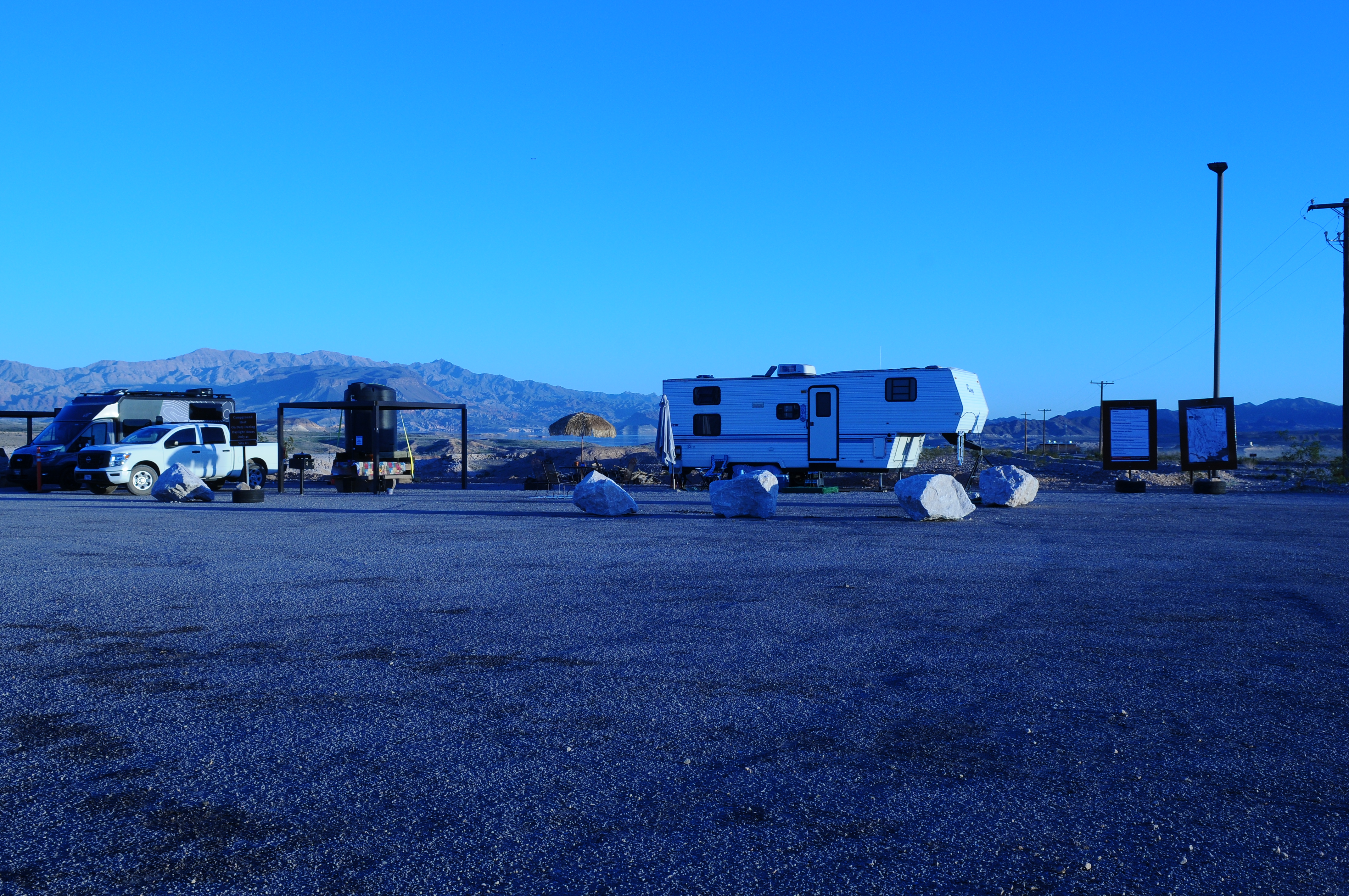
Defined primitive sites keep the open desert feel while protecting fragile shoreline habitat.
Off‑Grid Essentials: What to Bring for Desert Camping at Government Wash
Because Government Wash is still primitive, the difference between a great trip and a miserable one comes down to preparation. Here’s what you need to know—and bring—before you go.
Water, Waste, and Self‑Containment
There is no potable water on‑site, so plan to haul in everything you’ll need for drinking, cooking, and cleaning. In desert conditions, a safe guideline is at least one gallon of water per person per day, plus extra for pets, dishes, and rinsing gear. A dedicated freshwater tank, refillable jugs, or collapsible containers are essential for off‑grid camping here (NPS Camping).
For waste, Lake Mead requires dispersed campers within a quarter‑mile of the shoreline to have a way to contain human waste—such as an RV marine toilet, cassette toilet, or portable system—especially if you leave your campsite unattended overnight (NPS Compendium). Pack out all trash, gray water must be handled properly, and never dump any waste on the ground. Think of Government Wash as pack‑in, pack‑out desert camping with the added responsibility of protecting a sensitive lakeshore.
Power, Shade, and Temperature Swings
With no hookups, you’ll be relying on solar panels, generators, or battery banks. Solar is especially effective here thanks to abundant sunshine, but you’ll still want to manage your loads carefully—especially if you’re running a 12‑volt fridge, fans, or a Starlink dish. Generators are allowed but must follow quiet hours, so check Lake Mead’s current rules before you fire one up (Recreation.gov).
Desert camping tips for comfort include:
Bring shade structures or awnings—there’s virtually no natural shade at Government Wash.
Pack layers: days can be hot, nights surprisingly cool, especially outside peak summer.
Use reflective covers or window insulation to keep rigs cooler in the afternoon sun.
Safety, Weather, and Wind
Lake Mead’s desert environment can be deceptive. Calm, blue mornings can turn into windy afternoons with blowing dust and rough water. Secure tents, awnings, and camp furniture; stake things down more aggressively than you think you need to. Keep an eye on forecasts for high winds or storms, and avoid camping in low spots where flash flooding could be an issue during monsoon‑season downpours.
Cell coverage is hit‑or‑miss but generally present thanks to proximity to Las Vegas. Still, don’t rely on it in an emergency. A well‑stocked first‑aid kit, basic tools, a paper map of Lake Mead National Recreation Area, and enough fuel to get back to town are all smart additions for anyone treating Government Wash as a basecamp for desert exploration.
Making the Most of Your Lake Mead Camping Experience
One of the biggest draws of Government Wash is its easy access to the water. While lake levels continue to fluctuate, you’ll generally find spots where you can launch kayaks, canoes, or small motorcraft. The NPS improvements include better access points and parking near the shoreline, making it easier to split your time between camp and the water (NPS).
For many campers, Government Wash is also a perfect jumping‑off point for day trips into Las Vegas, Hoover Dam, or other parts of Lake Mead National Recreation Area. You can spend the day hiking, paddling, or exploring the city, then return to a quiet, star‑filled sky over the desert. That blend of wild shoreline and urban convenience is what keeps this spot high on the list of Las Vegas getaways for RVers and vanlifers.
Leave No Trace in a Newly Recovered Landscape
After such an intensive cleanup and restoration effort, how we camp at Government Wash in 2026 will determine whether it remains open and free. Following Leave No Trace principles is non‑negotiable here:
Camp only in designated sites and existing disturbed areas—don’t drive off established roads or create new tracks.
Pack out every bit of trash, including micro‑litter like bottle caps, cigarette butts, and food scraps (Leave No Trace).
Use existing fire rings if available, keep fires small, and fully extinguish them with water—not sand—before leaving or going to bed.
Respect wildlife by storing food securely and giving animals plenty of space.
📌 Key Takeaway: The future of Government Wash camping depends on campers treating it as a privilege, not an entitlement. If we keep it clean and low‑impact, it’s far more likely to stay open for years to come.
Final Thoughts: Is Government Wash Worth It in 2026?
If you’re looking for manicured lawns, full hookups, and paved pads, Government Wash is not your spot. But if you crave big views, starry nights, and the freedom of off‑grid camping within easy reach of Las Vegas, the 2026 version of Government Wash is absolutely worth a visit. The new rules and designated sites might feel like a trade‑off if you camped here in the old days, but they’ve also brought cleaner shorelines, safer conditions, and a more sustainable way to enjoy this slice of desert.
Before you go, check current NPS alerts for any seasonal changes to overnight camping, load up on water and supplies, and be ready for real desert conditions—no hookups, no assigned pads with utilities, just you, your rig, and the wide‑open landscape. Treated with respect, Government Wash can remain one of the best Lake Mead camping options for self‑contained campers chasing that classic Southwest boondocking experience.
